Sourcing that works the way your team actually works
Pickle 2.0 is coming soon. Unified candidate records, shared activity history, live lists, and net-new filtering - rebuilt for the way recruiting teams actually source.

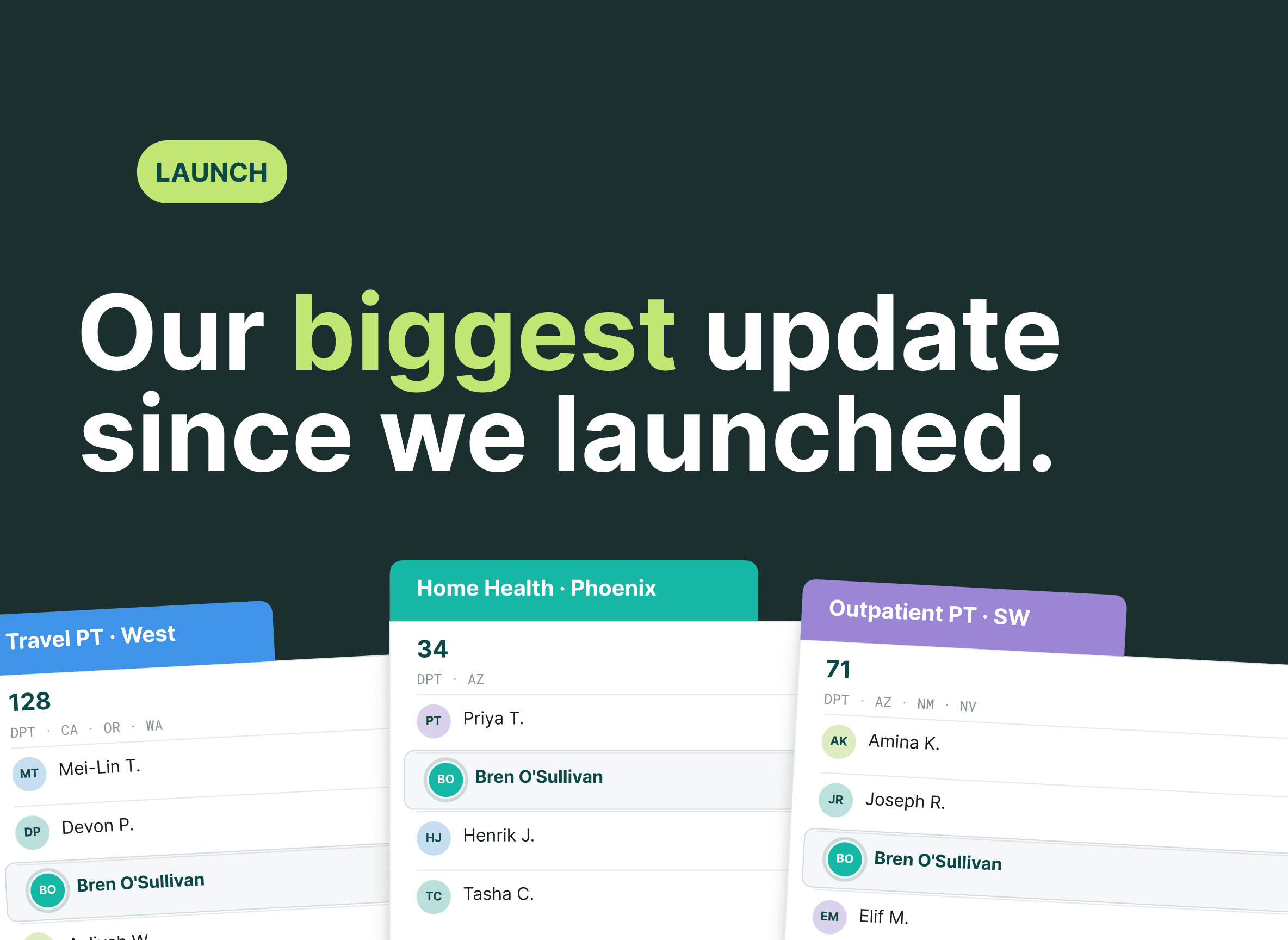
Sourcing that works the way your team actually works
Kara Amantoy, Diego Carvallo & Jon Lee May 22, 2026
In one month, a recruiter closed six placements sourced from Pickle. Six DPTs, six open roles filled, from a single platform - not from a stack of job boards or LinkedIn searches.
That's the kind of outcome we built Pickle for. But as teams used Pickle more and more, the way they wanted to use it changed - and the platform had to change with it.
How we got here
When we first built Pickle, the job was simple: help a recruiter find a qualified PT, OT, or SLP in seconds instead of hours. Run a search, get a verified list, export it, get to outreach. For a solo recruiter, that was a step-change.
Over the past year, something shifted in how customers were using us. The tool we'd built for one person started bumping into the seams of how a team actually works. We heard the same things, over and over:
"My searches feel static and I don't know when to re-run them to find new candidates."
"I can't see which candidates my teammate already reached out to."
"The same person is showing up in three of our workspaces and I have no idea."
"I just pulled contact info for someone - turns out my colleague pulled it last week."
"I'm tracking everything in a spreadsheet on the side because Pickle can't hold it."
Every one of those was a real conversation with a real recruiter. And every one pointed at the same thing: we'd built for individuals, but the work was happening in teams.
This release is the rebuild around that.
Your sourcing, where your team can work on it together
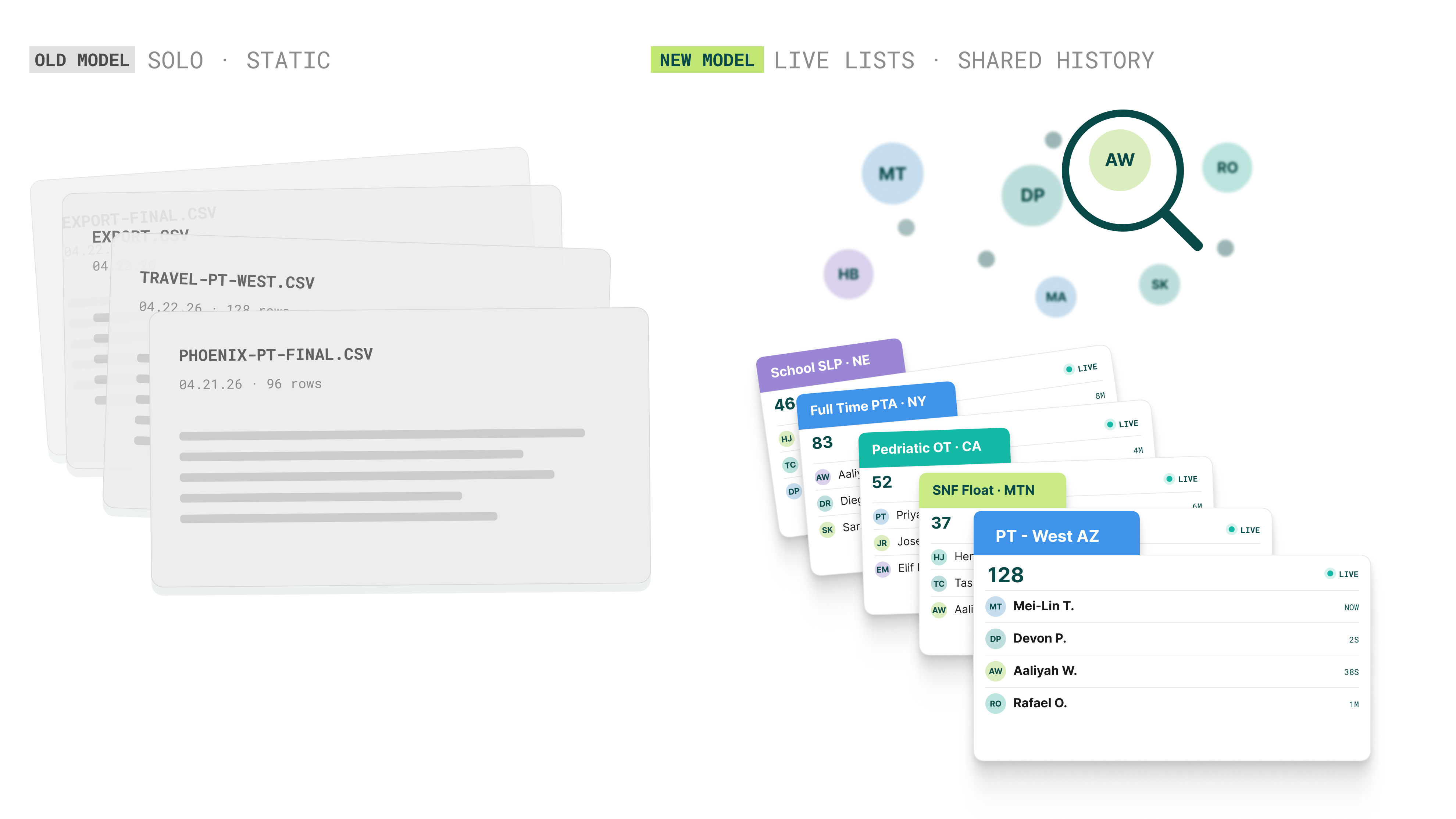 Before: Solo & Static. Now: Shared & Live.
The old workflow was a snapshot only one person could see. Run a search Tuesday, export the CSV, lock in interviews, only to find old data when you pick it up months later.
The new workflow is shared and live by default. Lists keep moving. Teammates' work shows up where it's needed. The spreadsheet running on the side, the one tracking who reached out to whom and when, is finally something Pickle can hold.
One candidate, every list she's on
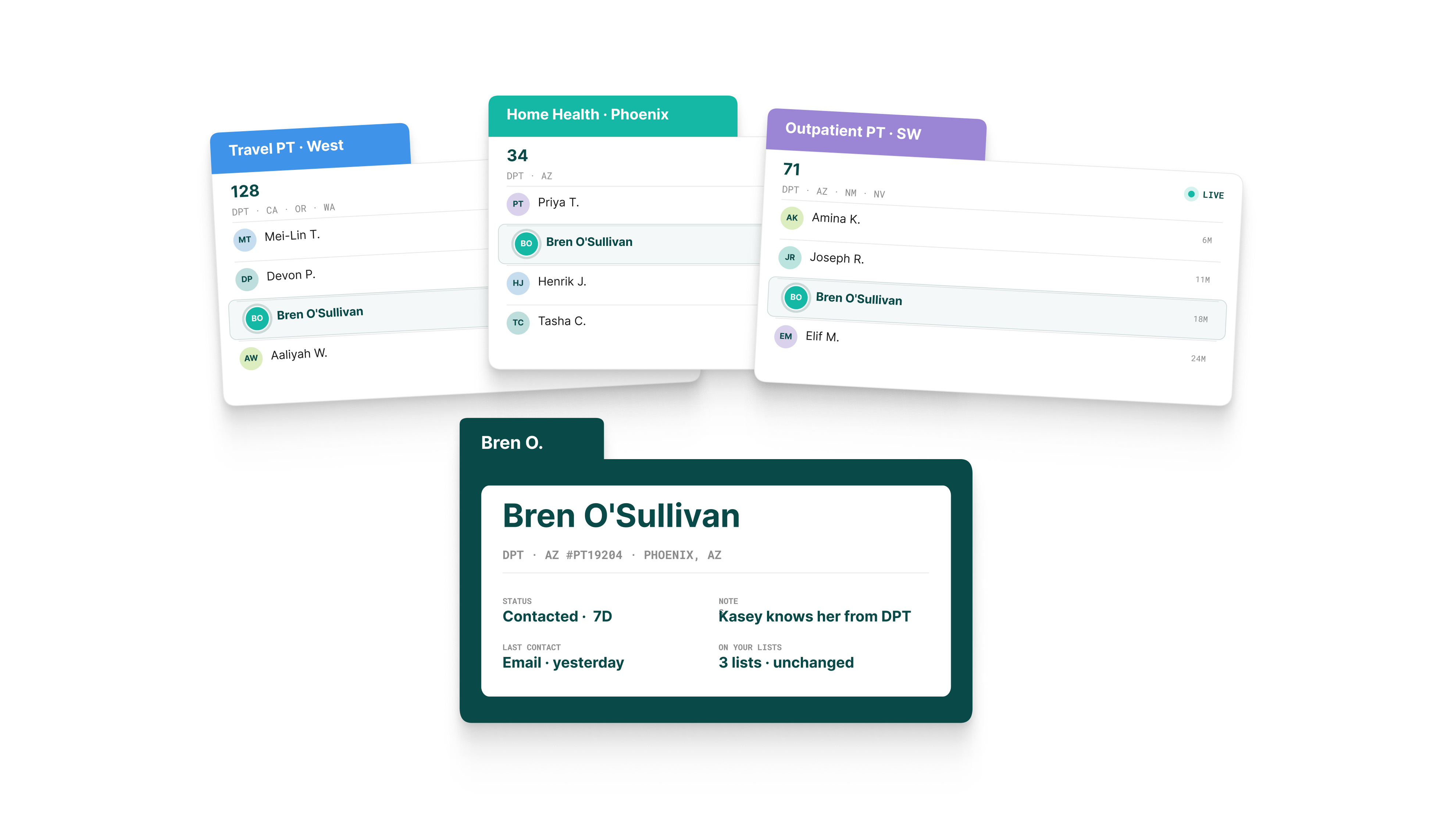 One candidate. Every list - with the team's full context on her profile.
Bren O'Sullivan is a DPT in Phoenix. In the old Pickle, she could exist as three different rows in three different workspaces - once in a Travel PT search, once in a Home Health pull, once in an Outpatient list. Three copies. No shared history, no way to know.
Now there's one Bren. She appears on every list she's added to, but it's the same record underneath. Her status, her notes, her contact history, the fact that Kasey from the Gilbert clinic team already knows her from DPT school - all of it travels with her. The moment another recruiter on the team finds her in a new search, the whole picture is there.
Pick up where your team left off
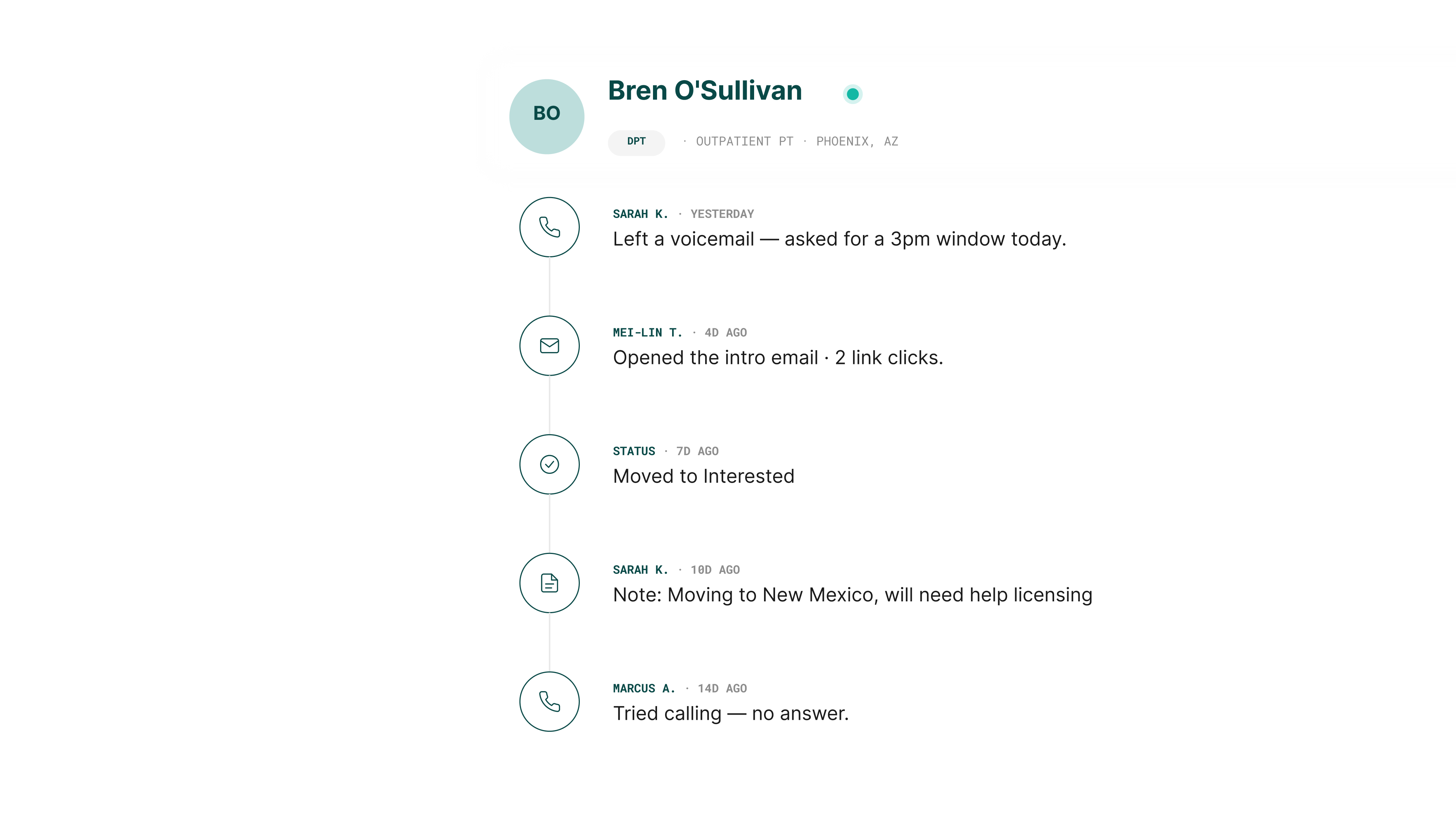 Every call, note, and status change on the candidate's record - in order.
Every call, every email, every status change, every note - on the candidate's record, in order.
When Sarah leaves a voicemail at 4pm asking for a 3pm window the next day, and Marcus picks up the role the following morning, Marcus doesn't start from scratch. He sees what Sarah did, what Mei-Lin's intro email got (opened, two link clicks), when the status moved to Interested, and the note Sarah left about Bren needing licensing help for a move to New Mexico.
That's a candidate Marcus can have a real conversation with - not a name he's introducing himself to for the second time.
Find the candidates your team hasn't worked
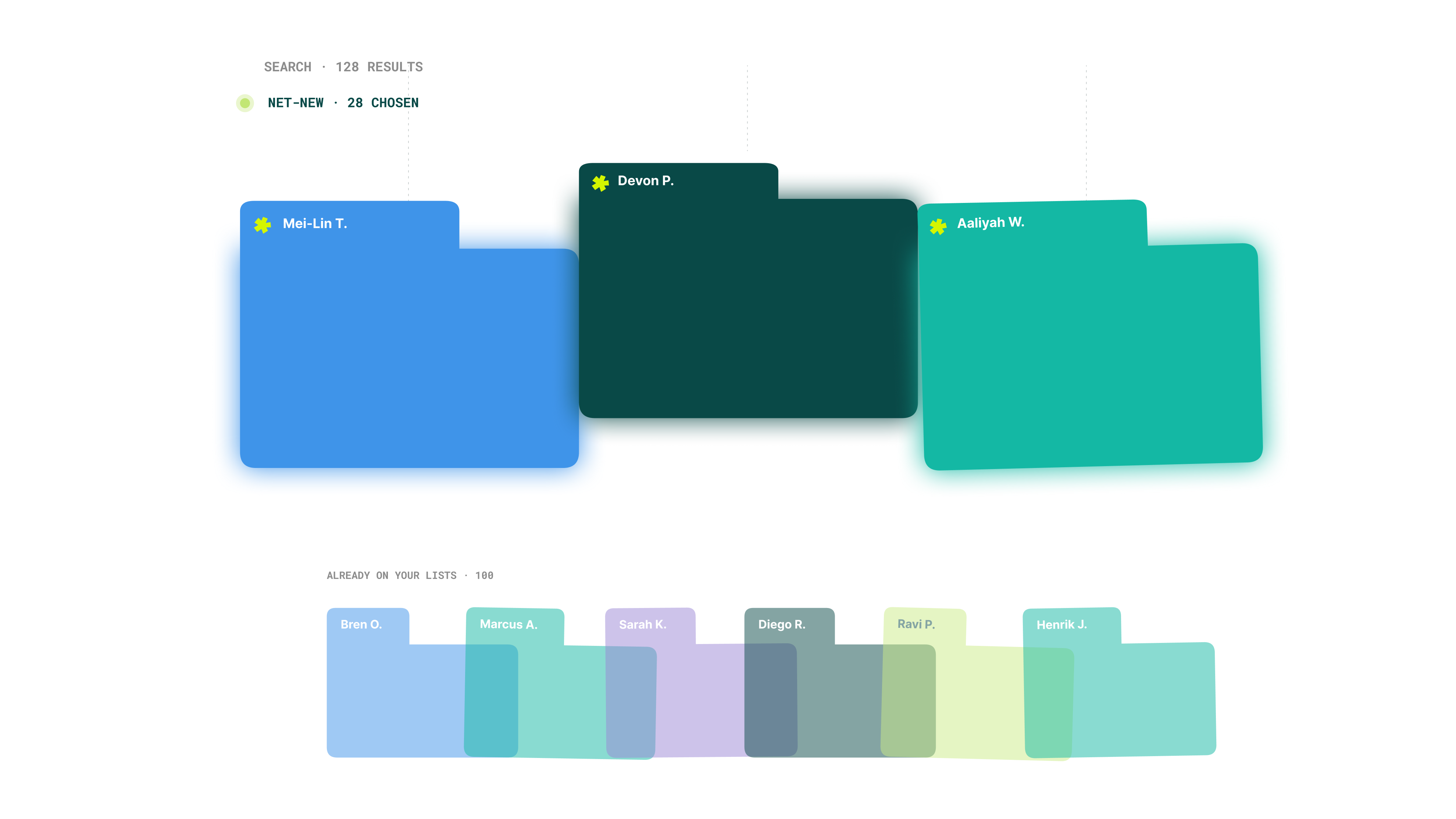 128 results. 28 new to your team. One filter to surface them.
As a team's combined sourcing history grows, every new search gets noisier. Run a query, get 128 results, scroll past 100 names your team has already worked. Sourcing turns into triage.
One filter changes the math. Net-new shows the 28 candidates nobody on the team has touched yet. The familiar names step aside; the new ones come forward. The team does the looking on the right people, so the recruiter can do the talking.
What this means if you're already with us
We're rolling out customer-by-customer over the next few weeks. If you're on Pickle today, you'll hear from Kara, Jon, or Diego to walk through the new platform and plan your migration - your lists, your contact history, your notes, all moved carefully.
If you have a project mid-flight on the current version, we'll sequence around it. Nothing gets dropped.
A note on how this got built
Almost every change in this release came from a conversation with a customer. The unified candidate record came from watching teams hit the same person three times across three workspaces. The shared activity timeline came from looking at the Excel sheets teams were keeping on the side. The net-new filter came from recruiters describing the cross-checks they were running before deciding to dig deeper into a new candidate.
To our early partners who told us what was broken and stuck with us while we fixed it - thank you.
Pickle exists to give healthcare recruiters more of the conversations worth having. This release is that, rebuilt for the way teams actually work.
Diego, Kara & Jon, on behalf of the Pickle team